Are Permanent Christmas Lights Worth It? An Honest Cost-and-Value Breakdown
A straight answer on permanent LED Christmas lights: when they pay for themselves versus a seasonal installer, how long they last, and who should skip them.
If you have ever balanced on a ladder in late November trying to clip lights to a frozen soffit, the appeal of permanent Christmas lights is obvious. But appeal is not the same as value. The honest answer to whether they are worth it depends on what you are comparing them to, how long you will own the home, and whether you will actually use them beyond December. This guide walks through the real numbers and the genuine trade-offs so you can decide.
What "permanent Christmas lights" actually are
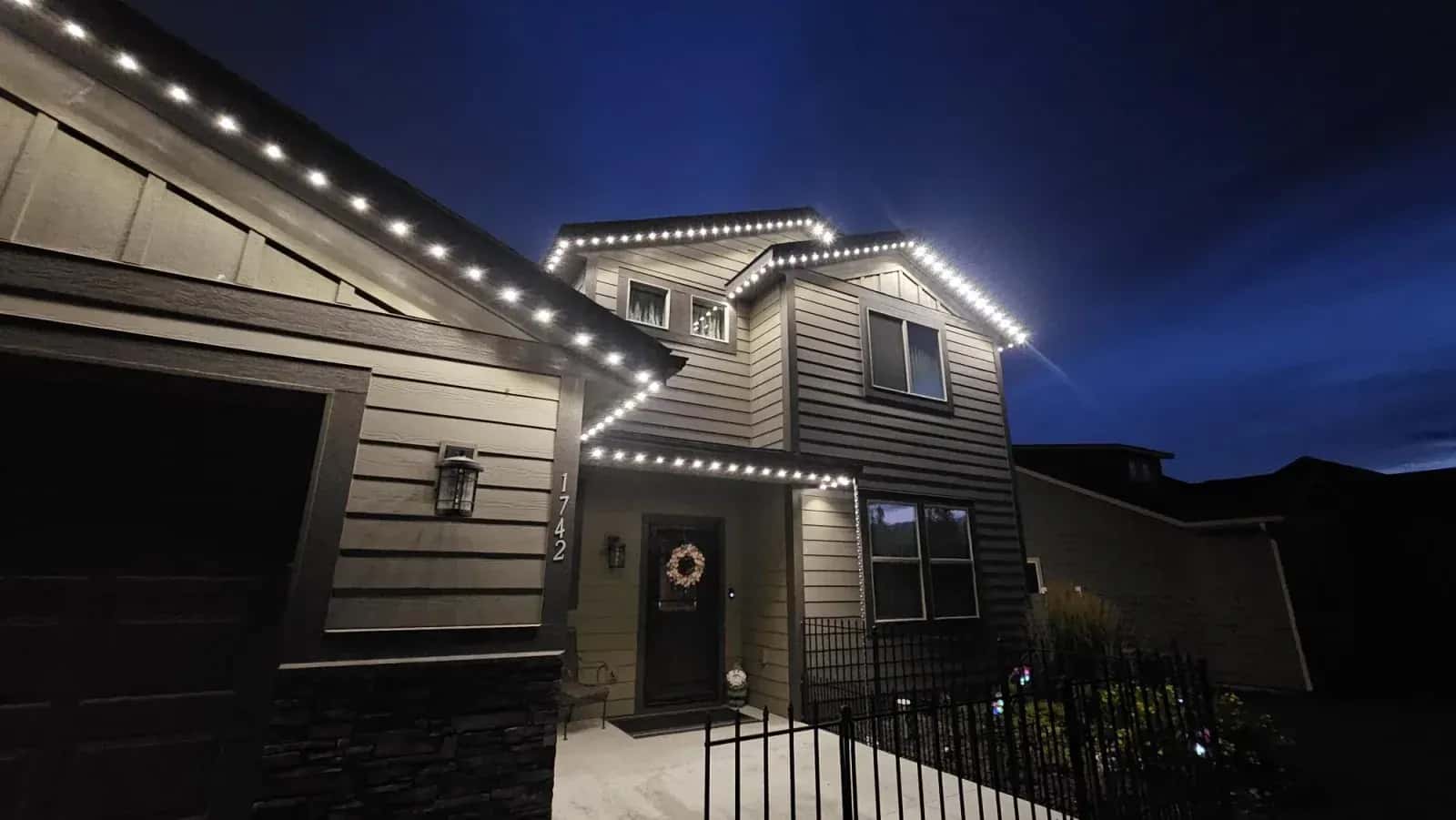
The term is a bit of a misnomer. Modern permanent lighting is an architectural-grade LED track — a slim aluminium channel mounted under the soffit or along the roofline — with individually addressable RGBW diodes tucked inside. It is controlled from an app on your phone. That means the same fixtures that glow classic warm white for Christmas can do orange and purple for Halloween, red and green for the holidays, team colours on game day, or a soft, dimmed white for everyday exterior lighting. It is closer to permanent exterior lighting infrastructure than to a seasonal decoration, which is central to the value question: you are not just buying Christmas lights, you are buying a lighting system you use all year.
The break-even math versus a seasonal installer
This is the calculation most people are really asking about. Across London and Southwestern Ontario, a professional seasonal light install-and-removal service typically runs somewhere in the range of $500 to $1,200 per year for an average two-storey home, depending on rooflines, height and how much of the house you cover. Some homes with steep peaks or extensive coverage pay more. That is money spent every single year, with nothing to show for it once the lights come down in January.
A professional permanent LED installation for a typical home generally lands in the low-to-mid four figures — broadly $2,100 to $5,000 in CAD for most homes, depending on linear footage, roof complexity and access. Do the simple division and the break-even against a seasonal service usually falls somewhere around three to six years. If you have been paying an installer for a decade, permanent lights would already have paid for themselves twice over.
Two honest caveats keep this from being pure marketing. First, if you currently hang your own lights for free, there is no annual dollar cost to break even against — the payback is measured in your time, safety and hassle rather than cash. Second, the comparison assumes you keep using the system. Which brings us to the part that actually tips the value equation.
The year-round use that changes the value
If permanent lights only ever did Christmas, they would be a hard sell for a home that hangs its own. The reason so many owners feel they got their money's worth is that the lights earn their keep the other eleven months. A warm, dimmed wash across the soffit becomes everyday landscape and security lighting — a genuinely useful thing on dark Ontario evenings from November through March. Then you get colour scenes for Halloween, Canada Day, Diwali, birthdays, or nothing in particular. Set on a schedule, they come on at dusk and off at bedtime without you thinking about it.
Judged only as Christmas lights, they are expensive. Judged as permanent exterior lighting that also does every holiday, the per-use cost drops dramatically because you are using them hundreds of nights a year, not thirty.
Lifespan, warranty and what you are really buying
The upfront price is defensible only because the hardware lasts. Quality permanent LED track is generally rated in the range of 50,000 hours or more — that translates to well over 15 years of normal evening use — and reputable installers back the system with a multi-year warranty on the diodes and components. The aluminium channel and the fixtures are built to sit outside through Ontario freeze-thaw cycles, driving rain and summer sun. That durability is the difference between a fixture and a decoration, and it is why the amortised cost over the life of the system is low even though the sticker price is not.
Home resale and curb appeal
Permanent lighting is increasingly treated like a finished feature rather than a gimmick, in the same category as landscape lighting or a good exterior paint job. It will not single-handedly move an appraisal, and you should not expect to recoup the full cost at sale. But a clean, well-integrated system that reads as a permanent upgrade — with the track colour-matched to the fascia so it disappears in daylight — adds to curb appeal and photographs well in a listing. In a competitive Southwestern Ontario market, a home that shows better online tends to draw more showings, and that has value even if it is hard to put an exact dollar figure on it.
The honest downsides
No guide is useful if it only lists the upsides. There are two real ones.
- Upfront cost. This is a four-figure purchase, not an impulse buy. Even with financing available to spread it out, you are committing real money before you have saved a single seasonal-install fee.
- You need a good roofline. Permanent track wants a clean, continuous soffit or fascia to mount to. Homes with lots of complex peaks, minimal soffit, heavy trees right against the house, or unusual architecture can still be done — but they cost more and, in a few cases, the result is not clean enough to be worth it.
- It is a fixed layout. The track runs where it is mounted. You get enormous flexibility in colour and pattern, but you cannot easily wrap a new tree or a temporary display the way you can with loose string lights.
- Quality varies widely. The category runs from premium architectural systems down to inexpensive consumer strips from brands like Govee. A discount product can look great in year one and fade, flicker or fail well before a professionally installed system would.
So — are they worth it for you?
Group yourself honestly. If you already pay someone every year to hang and remove lights, plan to stay in your home for the medium-to-long term, and like the idea of everyday and every-holiday lighting, the answer is a confident yes — the break-even is real and the year-round use seals it. If you hang your own lights happily, are moving within a year or two, or have a roofline that fights the install, the case is weaker and worth a careful second look. Most homeowners who feel they overpaid are the ones who bought purely for Christmas and never touched the app the rest of the year.
A local note for London and Southwestern Ontario
There is a specific regional angle worth naming. Our winters are long and our evenings get dark early, so a lighting system that doubles as everyday security and accent lighting genuinely earns more nights of use here than it would in a milder climate. Just as importantly, the ladder work that permanent lights eliminate is riskiest exactly when it is most common — clipping lights to an icy two-storey soffit in a St Thomas or Strathroy November is how people get hurt. Removing that annual climb, on top of the recurring installer bill, is a big part of why the value case tends to land well for homes across London, Woodstock, Ingersoll, Tillsonburg and the surrounding towns.
If you want to run the numbers on your own home rather than a general range, that is the honest next step. Our cost estimator at /cost-estimator gives you a ballpark based on your rooflines in a couple of minutes, and a free, no-pressure quote at /contact gets you an exact figure and a look at whether your roofline is a clean fit. Financing is available if you would rather spread the cost, and either way you will walk away knowing whether permanent lights are actually worth it for your house — which is the only answer that matters.
Frequently asked questions
How long do permanent Christmas lights last?
Quality permanent LED systems are typically rated for around 50,000 hours or more of use, which works out to well over 15 years of normal evening operation. Reputable installers also back the diodes and components with a multi-year warranty, so the effective lifespan is what makes the upfront cost reasonable when spread across the years you own them.
How much do permanent Christmas lights cost in Ontario?
A professional installation for an average home generally falls in the low-to-mid four figures — broadly $2,100 to $5,000 CAD for most homes — depending on how much of the home you cover, the roof complexity and access. Larger or more complex homes cost more. Financing is available to spread the cost, and a quote gives you an exact figure for your specific rooflines.
Do permanent lights pay for themselves?
If you currently hire a seasonal installer, usually yes. Seasonal install-and-removal often runs $500 to $1,200 per year locally, so a permanent system typically breaks even in about two to five years and then costs nothing more. If you hang your own lights for free, the payback is measured in saved time, safety and hassle rather than dollars.
Can you see the track during the day?
The track is a slim aluminium channel that is mounted tight under the soffit or along the fascia, and it can be colour-matched so it blends into the trim. From the ground in daylight it is designed to be discreet and reads as part of the roofline rather than a decoration. At night, only the light shows, not the individual bulbs.
Are cheap permanent lights like Govee worth it instead?
Consumer strips like Govee are far cheaper and fine for a quick DIY look, but they are not the same product as architectural-grade permanent track. Discount strips are more prone to fading, flickering and early failure, are not built for years of Ontario weather, and rarely carry an installer warranty. If you want a system that lasts 15-plus years and looks integrated, a professional install is the better long-term value.
Do I need a certain kind of roofline to get them installed?
A clean, continuous soffit or fascia is ideal because the track needs a solid, defined edge to mount to. Homes with complex peaks, minimal soffit or heavy tree cover can usually still be done, but it may cost more and occasionally the result is not clean enough to recommend. The honest way to know is a free site assessment, which is included with a quote.
Want a number for your own home?
Get a fast ballpark with our cost estimator, or book a free, no-pressure site visit and we'll measure your exact roofline. Financing over 24 months at 10% APR is available on approved credit.
Related guides
Does Permanent Lighting Increase Home Value? An Honest Look for Ontario Homeowners
Permanent roofline lighting is often sold as a home-value upgrade. Here is a straight answer on curb appeal, dusk listing photos, buyer perception, energy cost, durability, what realtors actually say, and how to hand the system over to a buyer.
Read guideQuestions to Ask a Permanent Lighting Installer Before You Sign Anything
The questions that separate a system you will still love in year seven from one you will be paying to fix in year two: hardware, warranty, who answers the phone, insurance, the quote and the calendar.
Read guideWarm White vs Cool White: A Colour Guide for Permanent Roofline Lighting
Colour temperature is the single decision that most shapes how permanent lighting looks on your house. Here is how 2700K, 3000K, 4000K and 6500K read on brick, stone, white vinyl and dark modern exteriors, plus how to test it before you commit.
Read guide